
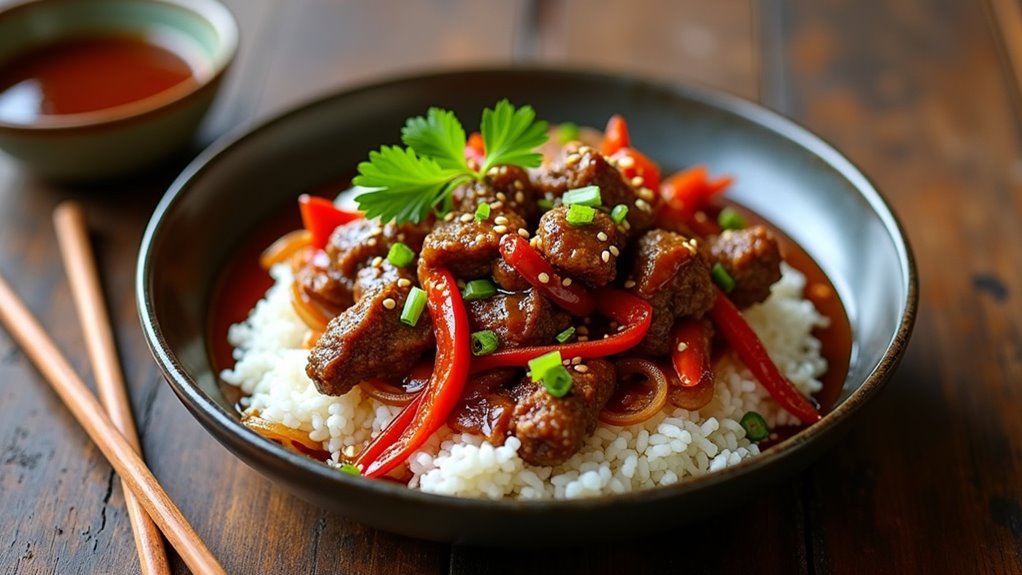
I’ve gotta tell you, my first attempt at making Beijing Beef was a bit of a mess—I accidentally mistook cornstarch for powdered sugar. Trust me, that was a cooking fail I won’t forget. But once I got the hang of it, wow, this dish really brings that Panda Express vibe right into my kitchen. You might think it’s super complicated, but it’s surprisingly simple. Curious how to make this delicious meal? Let’s explore it.
Why You’ll Love This Recipe
When I first tried making Beijing Beef, I’d no idea I’d end up with a dish that could rival my favorite takeout.
Seriously, the flavor combo is like a party for your taste buds. This Beijing Beef, Panda Express style, is a perfect blend of crispy beef, sweet sauce, and fresh veggies.
I love how easy it’s to whip up, too. You can impress your friends without breaking a sweat. Honestly, who doesn’t want a homemade version of takeout?
It’s fun to watch the beef sizzle and crisp up in hot oil. Plus, you can control the ingredients, which is a win for healthy eating.
Trust me; once you try this, you might ditch the delivery menus for good.
Equipment List
Before we plunge into cooking up that delicious Beijing Beef, let’s chat about the equipment you’ll need. First up, a large skillet or wok is essential for frying the beef. Trust me, trying to squeeze all that goodness into a tiny pan is a recipe for disaster.
Next, grab a mixing bowl for marinating the steak; I can’t tell you how many times I’ve spilled stuff on my counter. You’ll also want a sharp knife for slicing the flank steak—super important because thin slices make all the difference.
A slotted spoon is handy for removing the beef from the hot oil, and having some paper towels at the ready will soak up excess grease. It’s a straightforward setup, but it works wonders. Having essential tools like a high-quality knife and mixing bowl can significantly improve your cooking experience and results.
Our Ingredients
When it comes to whipping up a batch of delicious Beijing Beef, the star of the show is, of course, the ingredients. Each component plays an essential role in creating that delightful balance of flavors, and trust me, you’ll want to have everything prepped and ready to go.
It’s like a dance, where each ingredient knows its part. Plus, having everything in one spot can really save you from the last-minute scavenger hunt through your pantry. Now, let’s explore the essential ingredients you’ll need for this dish.
- 1 lb flank steak, thinly sliced against the grain
- 3 egg whites
- 1/4 cup + 2 tbsp cornstarch, divided
- 1/2 tbsp soy sauce
- 2.5 tbsp oyster sauce
- 1 tbsp white vinegar
- 1 tbsp Chinese black vinegar
- 1 tbsp sugar or honey
- 1 tbsp ketchup
- 1 tsp hoisin sauce
- 1 garlic clove, minced
- 1/2 inch ginger, grated
- 1 red bell pepper, sliced
- 1/2 onion, sliced
- Vegetable oil for frying
Now, let’s talk about some important considerations when you’re gathering these ingredients. For the flank steak, it’s best to cut it against the grain; this way, you avoid chewy bites and get that tender texture everyone loves.
Fresh ingredients, especially the garlic and ginger, really make a difference, so don’t skip on quality. And if you can, keep a light hand with the sauce components to start. You can always adjust to taste later, but no one wants a dish that’s overly salty or sweet right off the bat.
Oh, and if you find yourself without a particular sauce, don’t panic. Substitutions can work, but just remember, the core flavors might change a bit! Happy cooking!
Step-by-Step Instructions
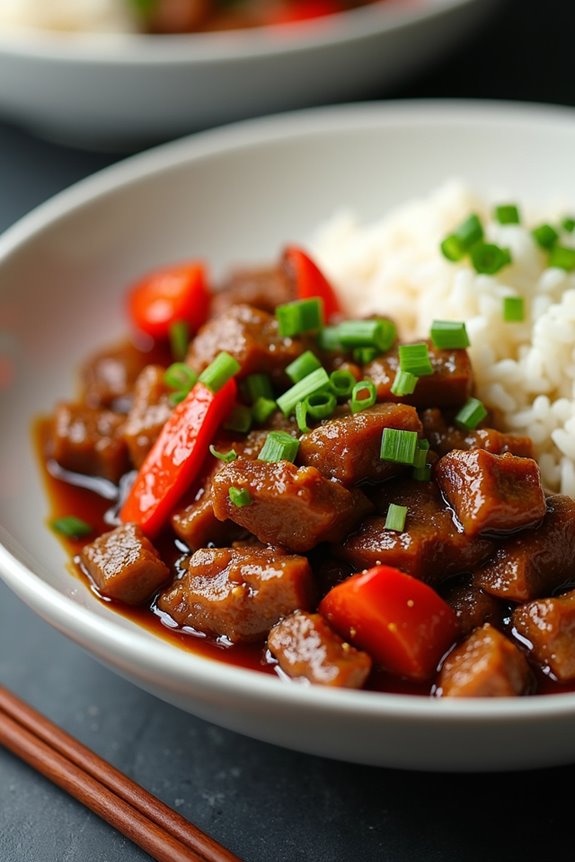
Making Beijing Beef isn’t just a cooking task—it’s an experience that brings the vibrant flavors of Chinese cuisine right to your kitchen. With just a few steps, you can create this delicious dish that’s sure to impress family and friends. Let’s explore the process of making your very own Beijing Beef.
Step-by-Step Instructions
- Marinate the beef: Start with 1 lb of flank steak, thinly sliced against the grain. In a bowl, combine the beef with 3 egg whites, 1/2 tbsp soy sauce, and 1/4 cup of cornstarch. Give it a good mix and let it marinate for about 30 minutes. This step is essential for tenderizing the meat, so don’t rush!
- Prepare the sauce: While the beef is marinating, grab another bowl and mix together 2.5 tbsp oyster sauce, 1/2 tbsp soy sauce, 1 tbsp white vinegar, 1 tbsp Chinese black vinegar, 1 tbsp sugar (or honey), 1 tbsp ketchup, and 1 tsp hoisin sauce. This combination creates that delightful sweet and savory flavor profile. Set this sauce aside, but make sure you can access it when the time comes.
- Coat the beef: After the marinade has worked its magic for 30 minutes, take the beef out of the bowl. Toss it in the remaining 2 tbsp of cornstarch until each piece is well-coated. This will create a nice crispy texture when you fry it.
- Fry the beef: Heat up some vegetable oil in a deep fryer or a heavy pot to about 350°F. Carefully drop in the coated beef pieces, being sure not to crowd the pan (you want them to fry evenly). Let them fry for about 2-3 minutes or until they turn golden brown. Once they’re done, drain them on a paper towel to soak up any excess oil. That sizzling sound? Music to your ears.
- Sauté the vegetables: In a separate pan, heat a splash of vegetable oil over medium heat. Toss in 1/2 onion (sliced), 1 red bell pepper (sliced), 1 minced garlic clove, and 1/2 inch of grated ginger. Sauté them until the onions turn translucent and the veggies are soft, which usually takes about 3-4 minutes. And let me tell you, your kitchen is going to smell fantastic.
- Combine with sauce: Pour in your pre-prepared sauce mixture and cook until it thickens slightly, about 1-2 minutes. Then, add the crispy beef back to the pan. Toss everything together until the beef is well-coated in that luscious sauce. It should look glossy and delicious—just like in the restaurants.
- Serve and enjoy: Once everything is combined, it’s time to serve! Bring out some steaming hot rice and dish up your Beijing Beef atop it. You’ll want to enjoy this while it’s hot; trust me, the crispy beef is best right out of the pan.
This dish is a beautiful balance of flavor and texture—from the tender, juicy beef to the vibrant veggies and that thick, savory sauce. Prepare to impress everyone at the dinner table with your culinary skills, all while savoring the joy of homemade Beijing Beef. Happy cooking!
Adding the right Vietnamese cooking equipment can enhance your culinary experience, making it easier to achieve authentic flavors in your home cooking.
Tips & Variations
Though it might seem intimidating at first, creating the perfect Beijing Beef can actually be a breeze with just a few handy tips and variations up your sleeve.
Trust me, slicing the beef thinly against the grain really makes a difference. It tenderizes it and helps absorb all those fantastic sauces.
If you want extra crispiness, frying in smaller batches is key. And hey, one of my favorite tweaks? Tossing in some broccoli or snap peas for a veggie boost. You can never have too many colors on your plate, right?
If you’re feeling adventurous, switch up the oyster sauce with teriyaki for a different flavor twist. Just remember, serve it hot—otherwise, you’ll be left with sad, soggy beef.
How to Serve?
Serving Beijing Beef can be a deliciously fun experience, and I’ve learned a few tricks to make it shine on your dinner table.
First off, don’t skimp on that steamed rice—it’s the perfect canvas for the juicy beef and rich sauce. I like to toss in some colorful veggies for a pop of freshness, too.
When I plate it up, I make sure to drape the beef over the rice, letting that beautiful sauce drip down. Garnishing with sesame seeds or sliced green onions adds a nice touch, right?
And here’s a pro tip: always serve it hot—nothing’s worse than sad, cold beef.
Storage & Reheating Guide
After enjoying that delicious plate of Beijing Beef, the last thing you want is to waste any leftovers.
Trust me, I’ve been there—facing leftovers with regret thinking about a tasty meal slipping away.
First, store your remaining beef in an airtight container in the fridge. It’ll keep well for about three to four days.
When you decide to tackle those leftovers, don’t just heat them up dry. Instead, I recommend reheating in a skillet over medium heat, adding a splash of water or broth.
This keeps it from drying out. Additionally, using Magnetic Measuring Spoons can ensure you add just the right amount of liquid. Give it a good stir until everything’s warmed through—it’ll be just like the first time.
You might even impress yourself with how good it tastes again.
Final Thoughts
Cooking up a delightful dish like Beijing Beef is like capturing a tiny piece of culinary magic in your kitchen.
Trust me, once you try making it, you’ll wonder why you never tackled it sooner. It’s so easy to whip up, yet feels fancy enough for a special occasion.
Remember that golden rule: thin slices of beef are your best friend here.
And hey, don’t fret if things get a bit messy; I promise I’ve splattered oil more times than I can count. The joy of watching it sizzle in the pan is worth every drop, right?